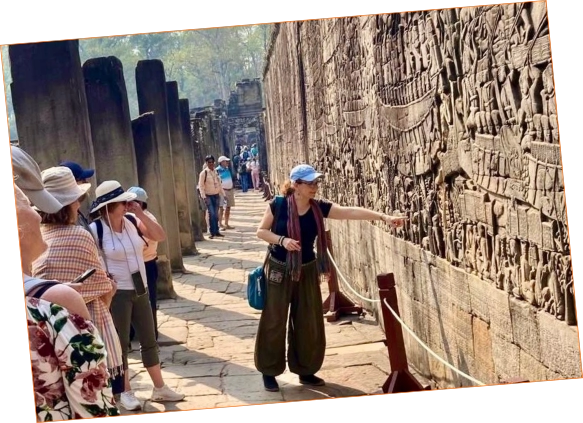
Meet Your Expert
Many
of
our
Cambodia
journeys
are
accompa
-
nied
by
Dr.
Borbala
Szava
,
who
has
spent
decades
studying
the
Hindu
and
Buddhist
tradi
-
tions,
monuments,
and
artistic
heritage
of
Southeast Asia.
Having
lived
in
Cambodia
and
earned
her
doc
-
toral
degree
through
research
on
Angkorian
art
history,
Bori
brings
unique
insight
to
every
journey.
Her
deep
knowledge
transforms
temple
visits
into
fascinating
explorations
of
mythology,
symbolism,
religion, and daily life in the Khmer Empire.
Beyond
the
monuments,
she
shares
stories
from
her
own
experiences
living
in
Cambodia,
helping
travelers
gain
a
deeper
understanding
of
contem
-
porary
Cambodian
society,
culture,
and
traditions.
Her
goal
is
not
simply
to
show
Cambodia,
but
to
help visitors truly understand it.
Wandering in Asia & Beyond LLC
wanderinginasiatravel@gmail.com
+1 4708859579
https://www.facebook.com/wanderinginasia
https://www.instagram.com/wanderinginasiatravel/



© 2026 Wandering in Asia & Beyond. All Rights Reserved. | [Privacy Policy] | [Terms of Use] | [Unsubscribe]
CAMBODIA
Ancient temples, warm hospitality, vibrant markets, and unforgettable landscapes. Culture • History • Food • Nature • Photography Cambodia is perfect for travelers seeking iconic temples, authentic local encounters, flavorful cuisine, and a deeper under - standing of Southeast Asia's history and traditions.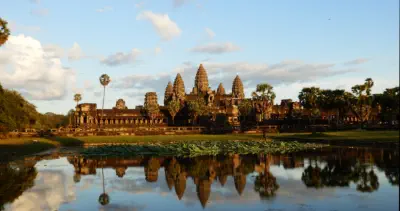
Angkor Wat
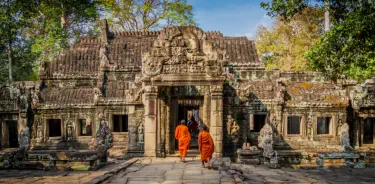
The world's largest religious monument and Cambodia's most iconic symbol. Originally built in the 12th century as a Hindu temple dedicated to Vishnu, it later became an important Buddhist pilgrimage site. Its intricate carvings, architectural perfection, and spiritual atmosphere con - tinue to inspire visitors from around the world.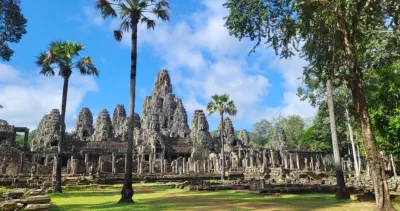
Bayon
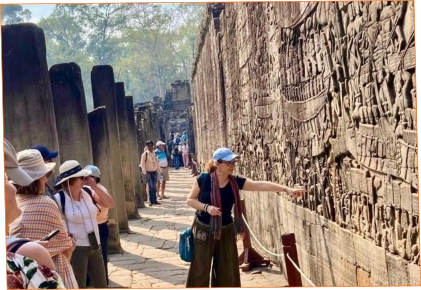
Located in the heart of Angkor Thom, Bayon is famous for its hundreds of enigmatic smiling faces carved into stone towers. The temple's detailed bas-reliefs provide a fascinating glimpse into daily life during the Khmer Empire.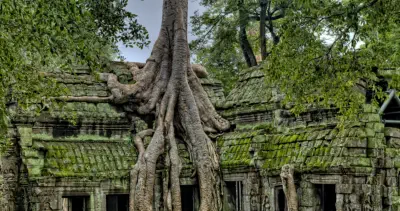
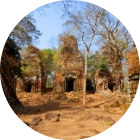
Ta Prohm
One
of
Angkor's
most
atmospheric
temples,
where
giant
silk-cotton
trees
and
strangler
figs
intertwine
with
ancient
stone
walls.
The
site
illustrates
the
powerful
relationship
between
nature
and
human
creation.
This
captivating,
jungle-choked
aesthetic
famously
served
as
the
backdrop
for
Angelina
Jolie’s
Lara
Croft:
Tomb
Raider
film.
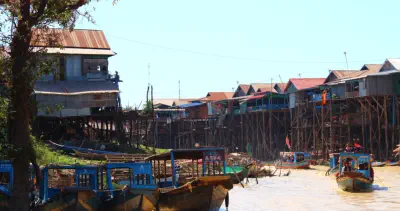
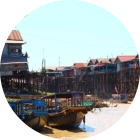
Tonlé Sap Lake
The largest freshwater lake in Southeast Asia and one of the world's most remarkable ecosystems. Its floating vil - lages provide unique insights into life adapted to the rhythms of the water.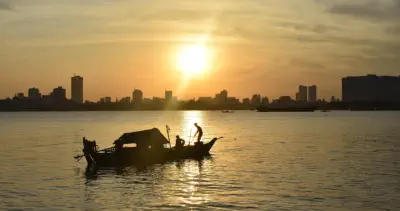
Phnom Penh
Cambodia's dynamic capital combines royal palaces, colonial architecture, bustling markets, riverside life, and important historical sites that help visitors under - stand the country's recent past.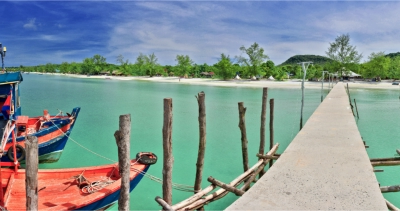
Kampot & Kep; Koh Rong & Koh Rong
Samloem
Colonial
charm,
pepper
plantations,
riverside
scenery,
and
fresh
seafood.
White-sand
beaches,
turquoise
water, and laid-back island life.

HIGHLIGHTS

THINGS TO DO
Explore Angkor
beyond the Main
Temples
Discover hidden temples, jungle ruins, ancient reser - voirs, and remote monu - ments that many visitors never see.Visit Local Villages
and Markets
Meet artisans, farmers, monks, and community members whose traditions have been passed down through generations.Cycle Through the
Countryside
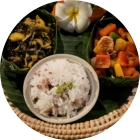
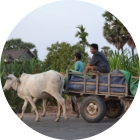
Travel along quiet village roads lined with rice fields, palm trees, and traditional wooden houses.Taste Traditional
Khmer Kitchen
Discover a beautifully bal - anced world of subtle spices, fresh herbs, and complex coconut curries.Take a Khmer
Cooking Class
Learn to prepare traditional dishes using fresh local in - gredients and centuries-old recipes.Cruise Tonlé Sap
Lake
Visit floating communities and observe one of Southeast Asia's most unique ways of life.Visit an Ethical
Elephant Sanctuary
Connect with these magnif - icent, gentle giants in their natural jungle habitat. It’s a deeply moving, heartwarm - ing experience focused en - tirely on rescue, respect, and compassionate conservation.Attend a Cultural
Performance
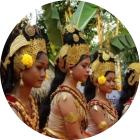
Witness classical Apsara dance, traditional music, and living cultural traditions.Don›t Miss the
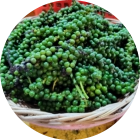
Kampot Pepper
Discover hidden temples, jungle ruins, ancient reservoirs, and remote monuments that many visitors never see.Relax on
Cambodia›s Islands
Enjoy pristine beaches, turquoise waters, snorkeling, and peaceful island life.OVERVIEW
Cambodia is one of Southeast Asia's most fascinating desti - nations, where magnificent temple cities emerge from the jungle, ancient traditions remain deeply woven into every - day life, and genuine hospitality welcomes visitors at every turn. Best known for the legendary temples of Angkor, the country offers far more than its iconic monuments: vibrant markets, floating villages, rural landscapes, tropical islands, remarkable cuisine, and a resilient culture shaped by cen - turies of history. Traveling through Cambodia reveals both the grandeur of one of Asia's greatest civilizations and the warmth of the people who continue to preserve its traditions. Whether exploring the masterpieces of Khmer architecture, cycling through rice fields, meeting local artisans, or enjoying a sunset over Tonlé Sap Lake, visitors discover a destination that rewards curiosity and deeper understanding. At Wandering in Asia & Beyond, Cambodia is more than a destination—it is a place we know intimately and are passionate about sharing.WHY VISIT CAMBODIA
Cambodia offers an extraordinary combination of cultural heritage, authentic local experiences, natural beauty, and warm hospitality. Unlike many destinations that have become heavily commercialized, Cambodia still provides countless oppor - tunities for genuine encounters with local communities and traditional ways of life. Visitors can explore one of the world's greatest archaeological treasures, enjoy some of Southeast Asia's most welcoming communities, discover a rich culinary tradition, and gain insights into a society that has rebuilt itself with remarkable resilience.
Cambodia
is
located
in
mainland
Southeast
Asia,
bordered
by
Thailand,
Laos,
and
Vietnam,
with
a
coastline
along
the
Gulf
of
Thailand.
Key
destinations
include
Siem
Reap
(Angkor),
Phnom
Penh,
Battambang,
Kampot,
Kep,
and
the
islands
of
Koh
Rong and Koh Rong Samloem.
BEST TIME TO GO
November – February The most comfortable season with cooler temperatures and lower humidity. Ideal for sightseeing and outdoor activities. March – May The hottest months of the year. Excellent for photography and fewer crowds, but visitors should be prepared for high temperatures. June – October The green season transforms the countryside into lush landscapes. Rain typically falls in short afternoon showers, while visitor numbers remain lower.HISTORY & HERITAGE
The Khmer Empire was among the most powerful civilizations in medieval Asia. Between the 9th and 15th centuries, Khmer kings built vast cities, reservoirs, roads, and temples that demonstrated extraordinary engineering and artistic achievements. Angkor became one of the largest urban centers in the world, and its monuments remain among humanity's greatest architectural accomplishments. Following the decline of Angkor, Cambodia experienced periods of foreign influence, colonial rule, and political upheaval. The tragic Khmer Rouge era (1975–1979) remains an important chapter in understanding modern Cambodia. Today, Cambodia is a vibrant and rapidly developing country that proudly preserves its cultural heritage while looking toward the future.CULTURE, TRADITIONS & RELIGION
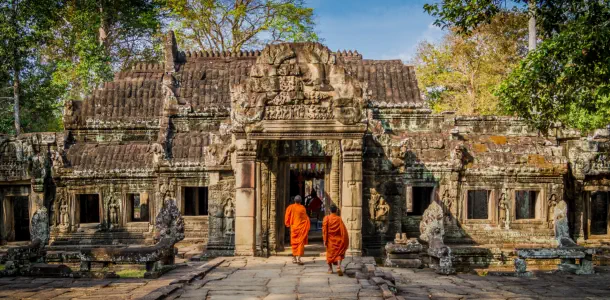
Religion remains central to Cambodian identity. More than 95% of Cambodians practice Theravada Buddhism, which influences values, festivals, social customs, and daily life. Buddhist temples serve not only as places of worship but also as centers of education and community life. Traditional beliefs often combine Buddhism with older Hindu and animist traditions, creating a rich cultural landscape that can still be seen in ceremonies, festivals, and local practices. Visitors will encounter: • Buddhist monks in saffron robes • Temple ceremonies and blessings • Traditional Apsara dance • Family-centered social values • Strong respect for elders and teachers • Ancient Hindu mythology preserved in temple art.PRACTICAL ADVICE
Dress modestly at temples. Remove hats when entering sacred areas. Always ask permission before photographing monks or local people. Carry small denominations of cash. Stay hydrated throughout the day. Respect local customs and traditions. Take time to slow down—Cambodia rewards travelers who move beyond the main sights.RESPONSIBLE TOURISM
We believe travel should create positive impacts for the people and communities we visit. Our Cambodia journeys prioritize: Locally owned hotels and restaurants Community-based tourism initiatives Fair employment for local guides and drivers Support for cultural preservation projects Reduced environmental impact Meaningful cultural exchange Whenever possible, we include opportunities to visit community projects, educational initiatives, and social enterprises that contribute directly to local livelihoods and cultural preservation. Through responsible travel, visitors not only discover Cambodia's treasures but also help ensure they remain protected for future generations.WHY US






Meet Your Expert
Many
of
our
Cambodia
journeys
are
ac
-
companied
by
Dr.
Borbala
Szava
,
who
has
spent
decades
studying
the
Hindu
and
Buddhist
traditions,
monuments,
and
artis
-
tic heritage of Southeast Asia.
Having
lived
in
Cambodia
and
earned
her
doctoral
degree
through
research
on
Angkorian
art
history,
Bori
brings
unique
in
-
sight
to
every
journey.
Her
deep
knowledge
transforms
temple
visits
into
fascinating
ex
-
plorations
of
mythology,
symbolism,
reli
-
gion, and daily life in the Khmer Empire.
Beyond
the
monuments,
she
shares
stories
from
her
own
experiences
living
in
Cambodia,
helping
travelers
gain
a
deeper
understanding
of
contemporary
Cambodian
society,
culture,
and
traditions.
Her
goal
is
not
simply
to
show
Cambodia,
but to help visitors truly understand it.
© 2026 Wandering in Asia & Beyond. All Rights Reserved.
| [Privacy Policy] | [Terms of Use] | [Unsubscribe]


Wandering in Asia & Beyond LLC
wanderinginasiatravel@gmail.com
+1 4708859579
https://www.facebook.com/wanderinginasi
a
https://www.instagram.com/wanderinginas
iatravel

CAMBODIA
Ancient temples, warm hospitality, vibrant markets, and unforgettable landscapes. Culture • History • Food • Nature • Photography Cambodia is perfect for travelers seek - ing iconic temples, authentic local en - counters, flavorful cuisine, and a deeper understanding of Southeast Asia's his - tory and traditions.
Angkor Wat
The world's largest religious monu - ment and Cambodia's most iconic symbol. Originally built in the 12th century as a Hindu temple dedi - cated to Vishnu, it later became an important Buddhist pilgrimage site. Its intricate carvings, architectural perfection, and spiritual atmos - phere continue to inspire visitors from around the world.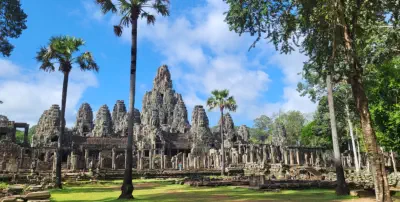
Bayon
Located in the heart of Angkor Thom, Bayon is famous for its hun - dreds of enigmatic smiling faces carved into stone towers. The tem - ple's detailed bas-reliefs provide a fascinating glimpse into daily life during the Khmer Empire.
Ta Prohm
One
of
Angkor's
most
atmospheric
temples,
where
giant
silk-cotton
trees
and
strangler
figs
intertwine
with
ancient
stone
walls.
The
site
illustrates
the
powerful
relationship
between
nature
and
human
creation.
This
captivating,
jungle-
choked
aesthetic
famously
served
as
the
backdrop
for
Angelina
Jolie’s
Lara Croft: Tomb Raider
film.
Tonlé Sap Lake
The largest freshwater lake in Southeast Asia and one of the world's most remarkable ecosys - tems. Its floating villages provide unique insights into life adapted to the rhythms of the water.
Phnom Penh
Cambodia's dynamic capital com - bines royal palaces, colonial archi - tecture, bustling markets, riverside life, and important historical sites that help visitors understand the country's recent past.
Kampot & Kep; Koh
Rong & Koh Rong
Samloem
Colonial
charm,
pepper
planta
-
tions,
riverside
scenery,
and
fresh
seafood.
White-sand
beaches,
turquoise
water,
and
laid-back
is
-
land life.

HIGHLIGHTS

THINGS TO DO
Explore Angkor
beyond the Main
Temples
Discover hidden temples, jungle ruins, ancient reser - voirs, and remote monu - ments that many visitors never see.Visit Local Villages
and Markets
Meet artisans, farmers, monks, and community members whose traditions have been passed down through generations.Cycle Through the
Countryside
Travel along quiet village roads lined with rice fields, palm trees, and traditional wooden houses.Taste Traditional
Khmer Kitchen
Discover a beautifully bal - anced world of subtle spices, fresh herbs, and complex coconut curries.Take a Khmer
Cooking Class
Learn to prepare traditional dishes using fresh local in - gredients and centuries-old recipes.Cruise Tonlé Sap
Lake
Visit floating communities and observe one of Southeast Asia's most unique ways of life.Visit an Ethical
Elephant Sanctuary
Connect with these magnif - icent, gentle giants in their natural jungle habitat. It’s a deeply moving, heartwarm - ing experience focused en - tirely on rescue, respect, and compassionate conservation.Attend a Cultural
Performance
Witness classical Apsara dance, traditional music, and living cultural traditions.Don›t Miss the
Kampot Pepper
Discover hidden temples, jungle ruins, ancient reservoirs, and remote monuments that many visitors never see.Relax on
Cambodia›s Islands
Enjoy pristine beaches, turquoise waters, snorkeling, and peaceful island life.OVERVIEW
Cambodia is one of Southeast Asia's most fascinating destinations, where magnificent temple cities emerge from the jungle, ancient traditions remain deeply woven into everyday life, and genuine hospitality welcomes visitors at every turn. Best known for the legendary temples of Angkor, the country offers far more than its iconic monuments: vi - brant markets, floating villages, rural landscapes, tropical islands, remark - able cuisine, and a resilient culture shaped by centuries of history. Traveling through Cambodia reveals both the grandeur of one of Asia's greatest civilizations and the warmth of the people who continue to preserve its traditions. Whether exploring the mas - terpieces of Khmer architecture, cycling through rice fields, meeting local arti - sans, or enjoying a sunset over Tonlé Sap Lake, visitors discover a destination that rewards curiosity and deeper understanding. At Wandering in Asia & Beyond, Cambodia is more than a destination—it is a place we know intimately and are passionate about sharing.WHY VISIT CAMBODIA
Cambodia offers an extraordinary combination of cultural heritage, au - thentic local experiences, natural beauty, and warm hospitality. Unlike many destinations that have become heavily commercialized, Cambodia still provides countless opportunities for genuine encounters with local commu - nities and traditional ways of life. Visitors can explore one of the world's greatest archaeological treasures, enjoy some of Southeast Asia's most welcoming communities, discover a rich culinary tradition, and gain insights into a society that has rebuilt itself with remarkable resilience.
Cambodia
is
located
in
mainland
Southeast
Asia,
bordered
by
Thailand,
Laos,
and
Vietnam,
with
a
coastline
along
the
Gulf
of
Thailand.
Key
destina
-
tions
include
Siem
Reap
(Angkor),
Phnom
Penh,
Battambang,
Kampot,
Kep,
and
the
islands
of
Koh
Rong
and
Koh Rong Samloem.
BEST TIME TO GO
November – February The most comfortable season with cooler temperatures and lower humidity. Ideal for sightseeing and outdoor activities. March – May The hottest months of the year. Excellent for photography and fewer crowds, but visitors should be prepared for high temperatures. June – October The green season transforms the countryside into lush landscapes. Rain typically falls in short afternoon showers, while visitor numbers remain lower.HISTORY & HERITAGE
The Khmer Empire was among the most powerful civilizations in medieval Asia. Between the 9th and 15th centuries, Khmer kings built vast cities, reservoirs, roads, and temples that demonstrated extraordinary engineering and artistic achievements. Angkor became one of the largest urban centers in the world, and its monuments remain among humanity's greatest architectural accomplishments. Following the decline of Angkor, Cambodia experienced periods of foreign influence, colonial rule, and political upheaval. The tragic Khmer Rouge era (1975–1979) remains an important chapter in understanding modern Cambodia. Today, Cambodia is a vibrant and rapidly developing country that proudly preserves its cultural heritage while looking toward the future.CULTURE, TRADITIONS &
RELIGION
Religion remains central to Cambodian identity. More than 95% of Cambodians practice Theravada Buddhism, which influences values, festivals, social customs, and daily life. Buddhist temples serve not only as places of worship but also as centers of education and community life. Traditional beliefs often combine Buddhism with older Hindu and animist traditions, creating a rich cultural landscape that can still be seen in ceremonies, festivals, and local practices. Visitors will encounter: • Buddhist monks in saffron robes • Temple ceremonies and blessings • Traditional Apsara dance • Family-centered social values • Strong respect for elders and teachers • Ancient Hindu mythology preserved in temple art.PRACTICAL ADVICE
Dress modestly at temples. Remove hats when entering sacred areas. Always ask permission before photographing monks or local people. Carry small denominations of cash. Stay hydrated throughout the day. Respect local customs and traditions. Take time to slow down—Cambodia rewards travelers who move beyond the main sights.RESPONSIBLE TOURISM
We believe travel should create positive impacts for the people and communities we visit. Our Cambodia journeys prioritize: Locally owned hotels and restaurants Community-based tourism initiatives Fair employment for local guides and drivers Support for cultural preservation projects Reduced environmental impact Meaningful cultural exchange Whenever possible, we include opportunities to visit community projects, educational initiatives, and social enterprises that contribute directly to local livelihoods and cultural preservation. Through responsible travel, visitors not only discover Cambodia's treasures but also help ensure they remain protected for future generations.WHY US






INFOLINE: 1-470-885-9579